Setup, Dismantle and Transport Fees Explained
Every quote we send has a line for setup, dismantle and transport. Here is exactly what it covers, why it is separate from the package price, and what makes it go up or down.
Published · Updated · Malta DJ Events
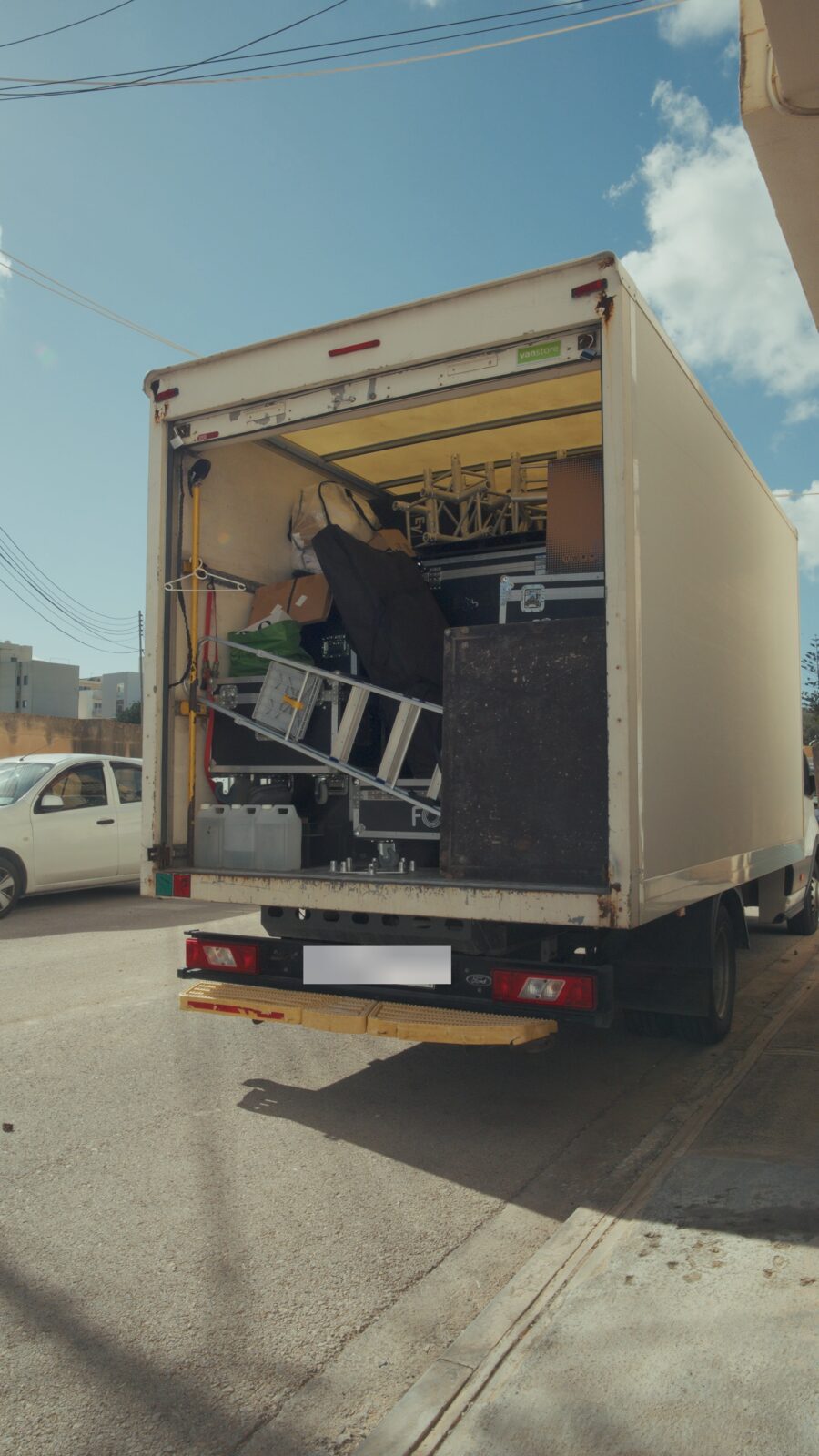
It is a fair question, and clients ask it often. If the package is €890, why is there another line underneath it? The short answer is that the package price covers the equipment and the talent, while the setup, dismantle and transport fee covers the work of physically getting all of it to your venue, building it properly, and removing it afterwards. Quoting them separately keeps the pricing honest, because that second part genuinely varies by venue.
What the fee actually pays for
An event that looks effortless at 8pm usually started at midday. A typical wedding setup involves loading the van to a plan, driving to the venue, carrying everything to the right rooms, building truss and staging, rigging and focusing lighting, placing and cabling speakers, running power safely, dressing cables so nothing trails across a walkway, sound checking the system, testing every microphone, then waiting through the event and taking the whole thing down and reloading it, often well after midnight.
That is crew hours, van hours and fuel. It is the least glamorous part of what we do and one of the biggest costs of running an events company properly.
Why it is not just baked into one price
We could average it and quote one number, and some suppliers do. The problem is that averaging means easy venues subsidise difficult ones. A ballroom with lift access and a loading bay ten minutes from our base is a completely different job from a hilltop farmhouse with steps, no vehicle access and a 4pm access window. Quoting the logistics separately means you pay for your venue rather than for someone else’s.
What makes it go up
Distance and location are the obvious ones, and Gozo is the clearest example since it involves the ferry and a much longer day for the crew. Beyond that: difficult access, meaning steps, narrow lanes, no vehicle access or a long carry from where we can park. Historic and heritage venues, where we cannot fix to walls or ceilings and everything must be free standing and protected. Multiple areas, since a ceremony in one space and dancing in another is effectively two builds. Late access, where the room is only released a couple of hours before doors and we need more crew to hit the deadline. And overnight dismantles, which need a crew willing to work to two or three in the morning.
What keeps it down
Ground floor or lift access, somewhere legal to park close to the room, a generous build window earlier in the day, a single space rather than several, and a venue we already know well. If you are still choosing between venues, tell us the shortlist and we will tell you honestly which ones are straightforward and which will carry a higher logistics cost.
Our current transport structure
Setup, transport and dismantle are included within 20 km of our base in Mgarr, which covers most of Malta. Gozo carries a €200 surcharge including the ferry. Difficult access and historic venues carry a €150 surcharge. Anything unusual is quoted after we have seen the access, which is what a site visit is for on larger productions.
Dry hire is different
If you are renting equipment rather than booking an event, you have a choice. Collect it yourself and there is no transport cost at all. Have us deliver and collect, and transport is €60 across Malta or €200 for Gozo. Have us deliver, install and test but not stay, which suits villas and restaurants, and that is quoted per job. All prices exclude VAT.
What you should expect from any supplier
Ask for the logistics cost in writing before you book, and ask what it includes. A supplier who cannot tell you whether setup, dismantle and transport are covered is a supplier who may come back with an invoice you did not expect. Send us your venue and date and you will have the full number, packages and logistics together, within 24 hours.