Services / Lighting
Dancefloor Lighting
Lighting that moves with the music and builds through the night, so the floor looks as good as it sounds.
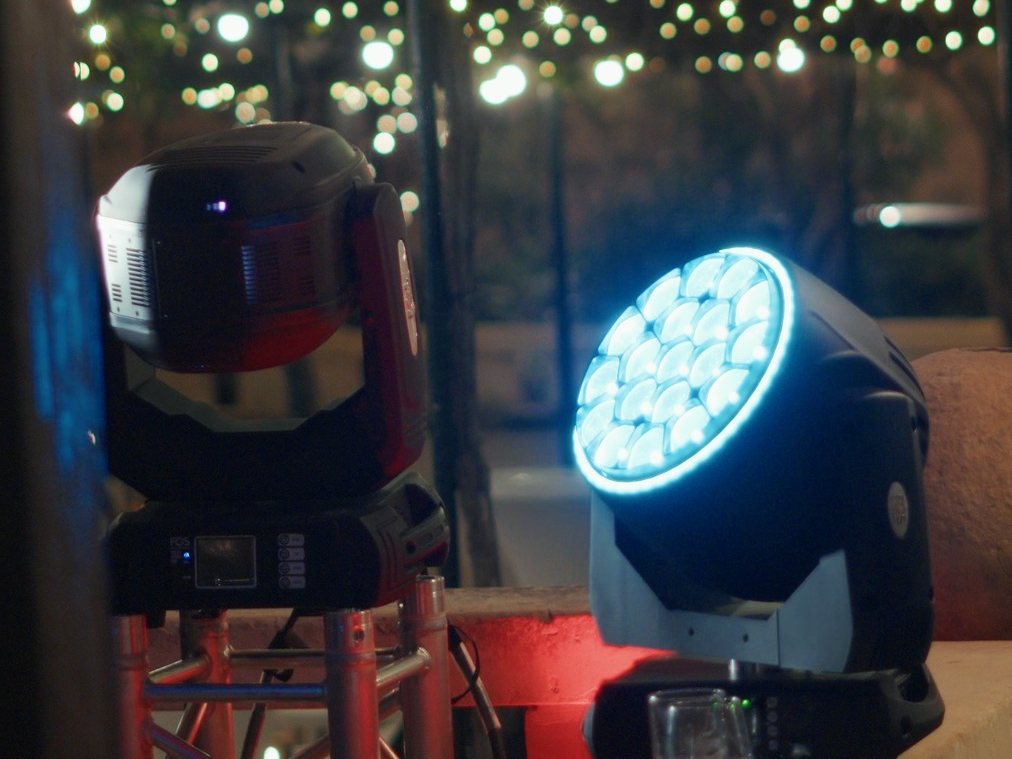
What it is
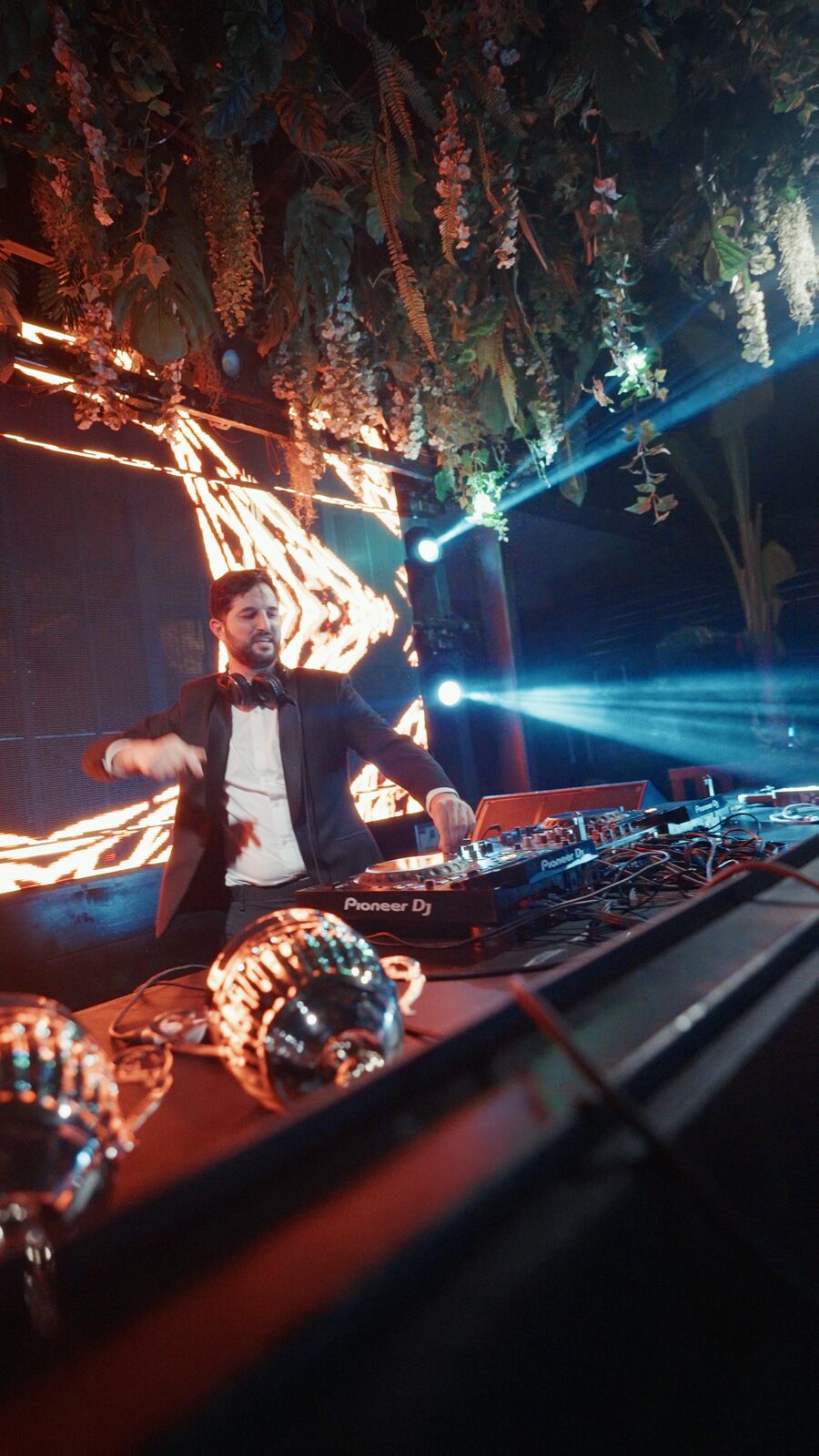
Dancefloor lighting is the part of a night people feel without being able to name. A room with no lighting design looks like a room with the lights turned down. A room with the right fixtures, aimed properly and run live to the music, looks like an event.
The confusing part is that lighting is sold as a list of fixture names that mean nothing unless you work in the industry. Wash, spot, beam, strobe. Below is what each one actually does, so you can picture the result rather than the equipment.
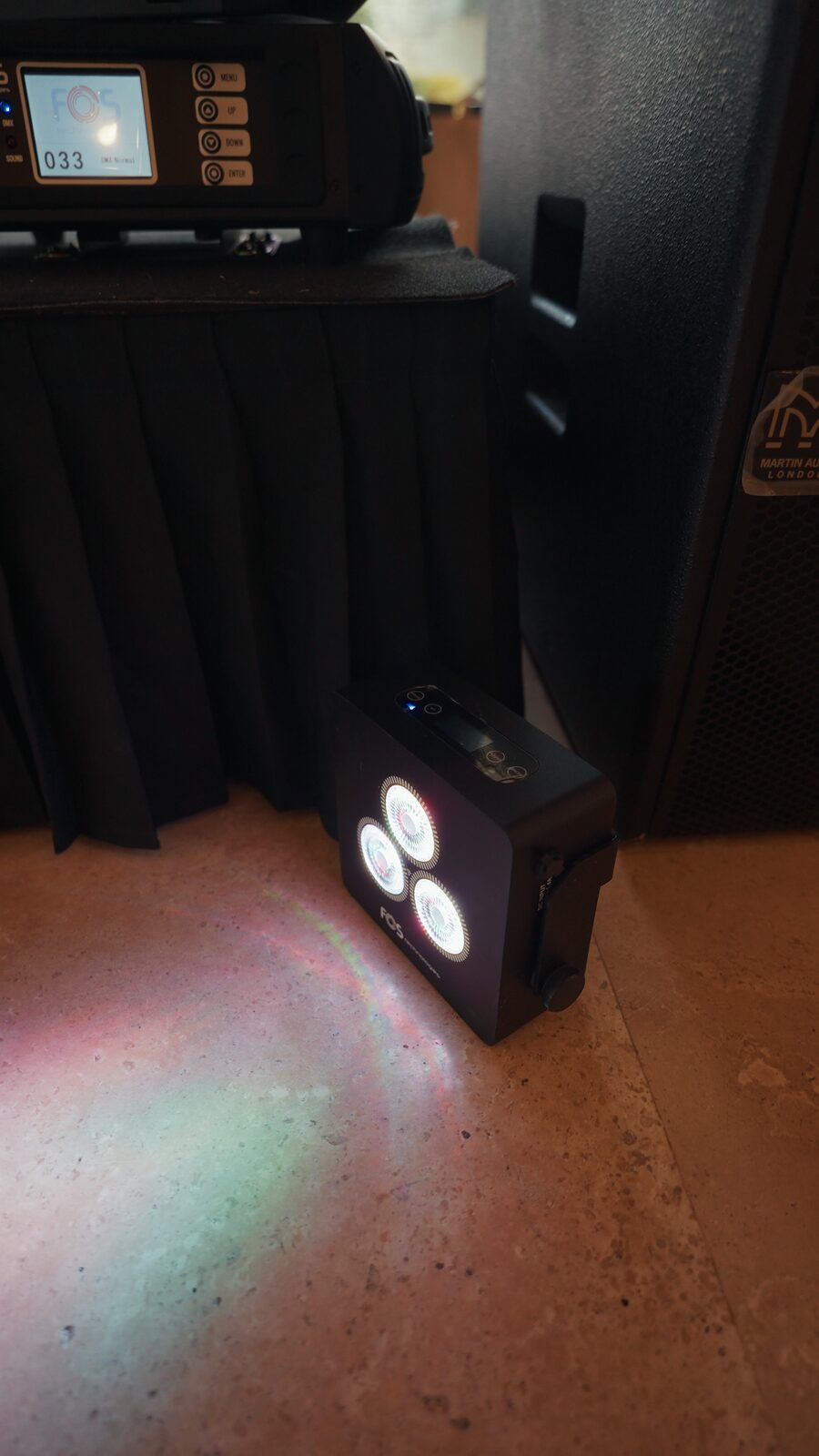
Depending on the venue, uplighting will do as much for the room as the dancefloor rig does, which is why the two are usually specified together. Everything we rig is run live rather than left on a loop, and that matters more than the fixture count. Dinner stays warm and still, the first dance is lit for the photographer, and the floor lifts when the party actually starts.
How it works
01
Fixtures go up during setup
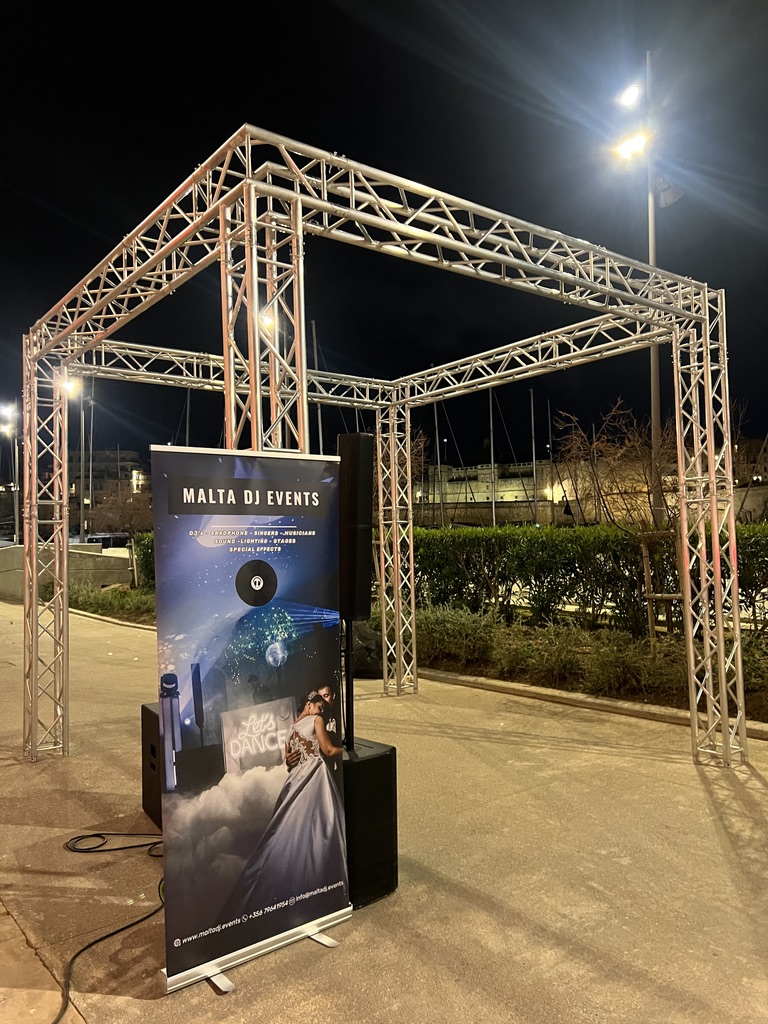
On stands either side of the floor for most weddings, or flown on truss where we need height and a cleaner look. Cabling is run and taped so nothing crosses a walkway.
02
Programmed against your timeline
We build looks for each part of the night: arrival, dinner, speeches, first dance, party, last song. Colours are matched to your scheme.
03
Run live by your DJ
Nothing is on autopilot. The lighting responds to what is actually happening in the room, which is why the big moments land instead of arriving a bar late.
04
Builds as the night goes
At a wedding we keep it white and elegant through dinner and the first dance, then move into full party colour once the floor opens. At a corporate event we set the palette to your brand colours from the start.
What each type of light actually does
Most setups use a combination. Understanding the difference is the fastest way to know what you are looking at in a photograph you like.
Wash
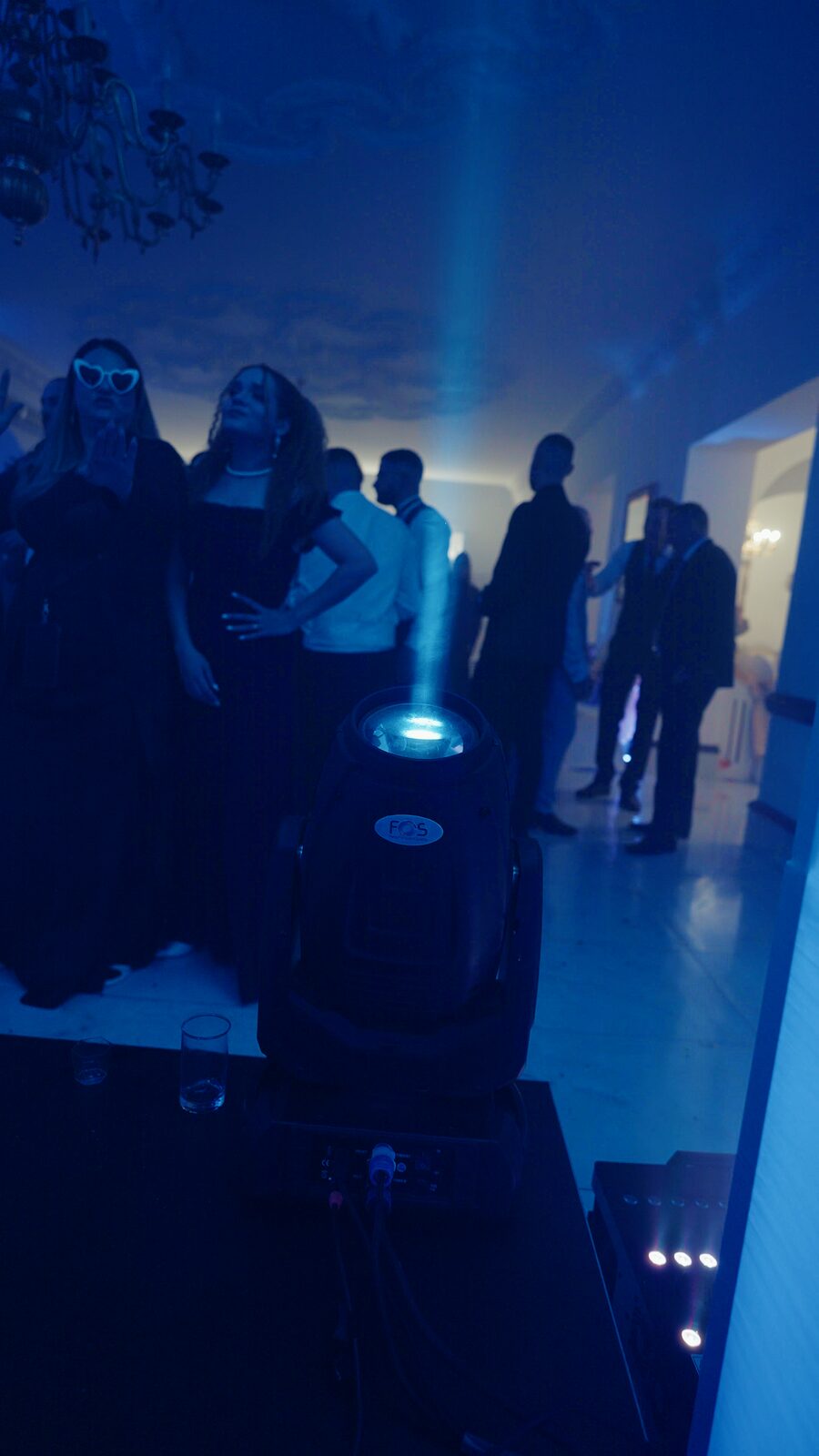
A soft, wide flood of colour with no hard edge. Washes fill the room and the crowd evenly and set the overall mood. This is the colour you see on the walls and on people. Best for atmosphere, and essential if the night is being filmed, because video needs light on faces.
Spot
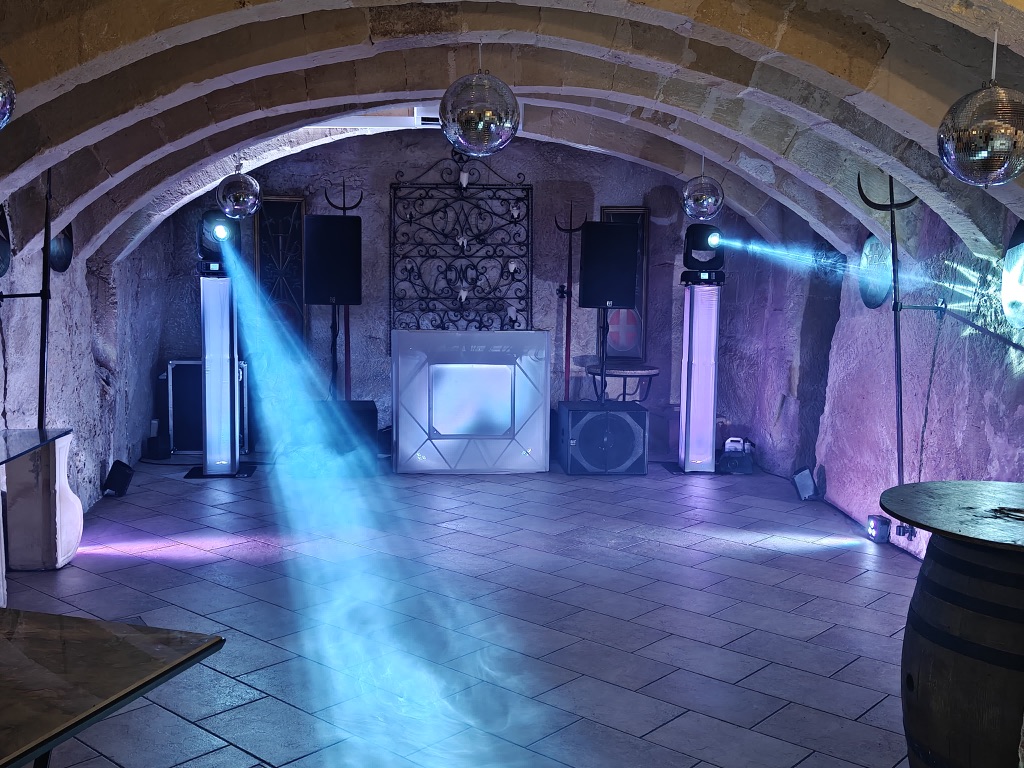
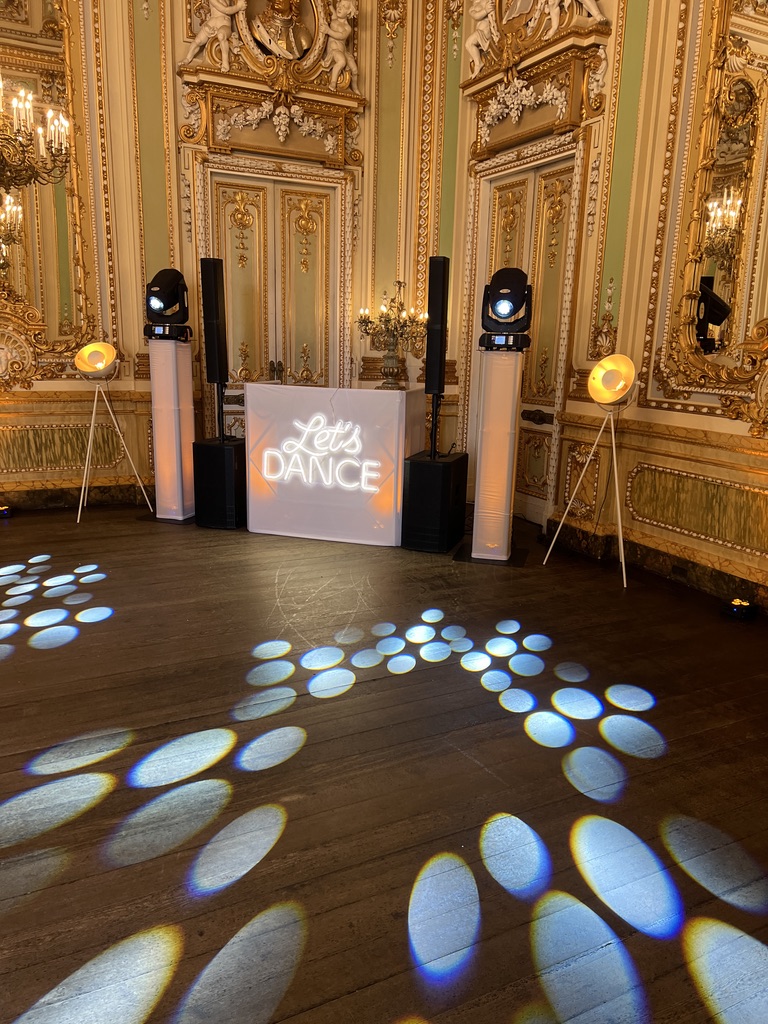
A tight circle of light with a sharp, defined edge. Spots can project patterns and shapes, called gobos, onto a floor, wall or ceiling. This is how your initials or a monogram end up on the dancefloor, or how a plain stone wall gets a repeating pattern across it.
Beam
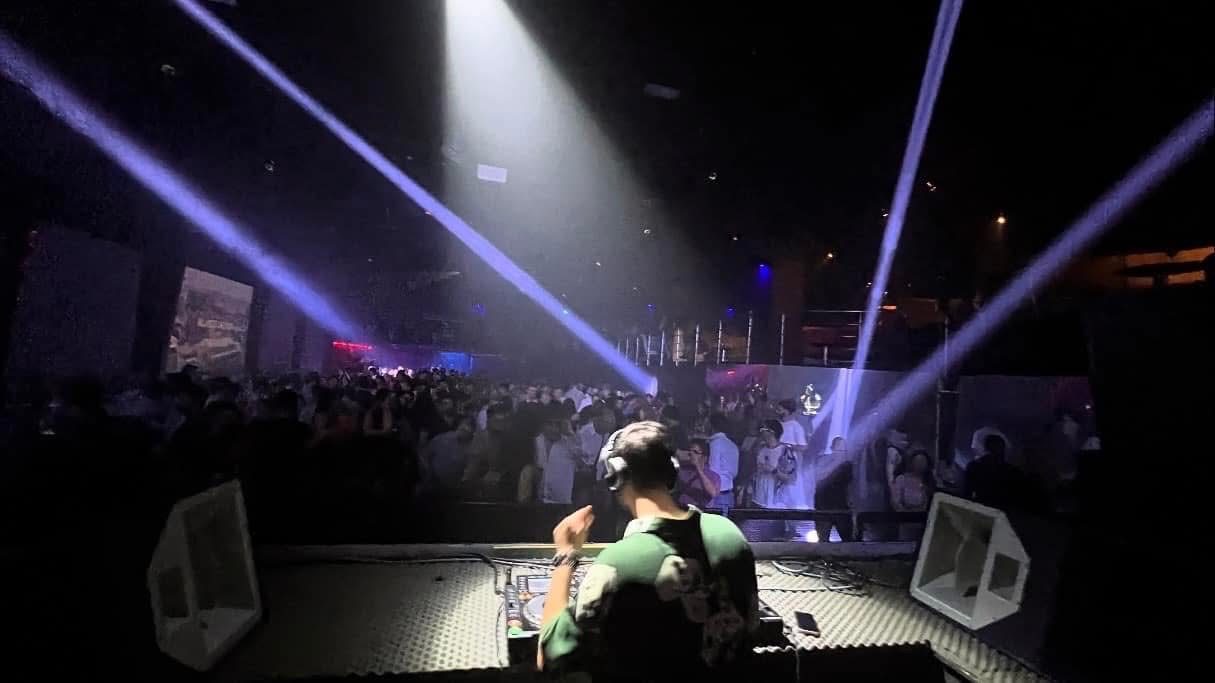
A narrow, dense shaft of light that stays tight over distance instead of spreading. Beams are the concert look: fans of light sweeping over the crowd, tight columns cutting across the room. They only become visible when there is haze in the air, so beams and haze go together.
Strobe and blinder
Short, intense bursts of white light. Used sparingly and only at peak moments, a drop, a countdown, the start of the after party. Too much and it stops meaning anything.
Haze
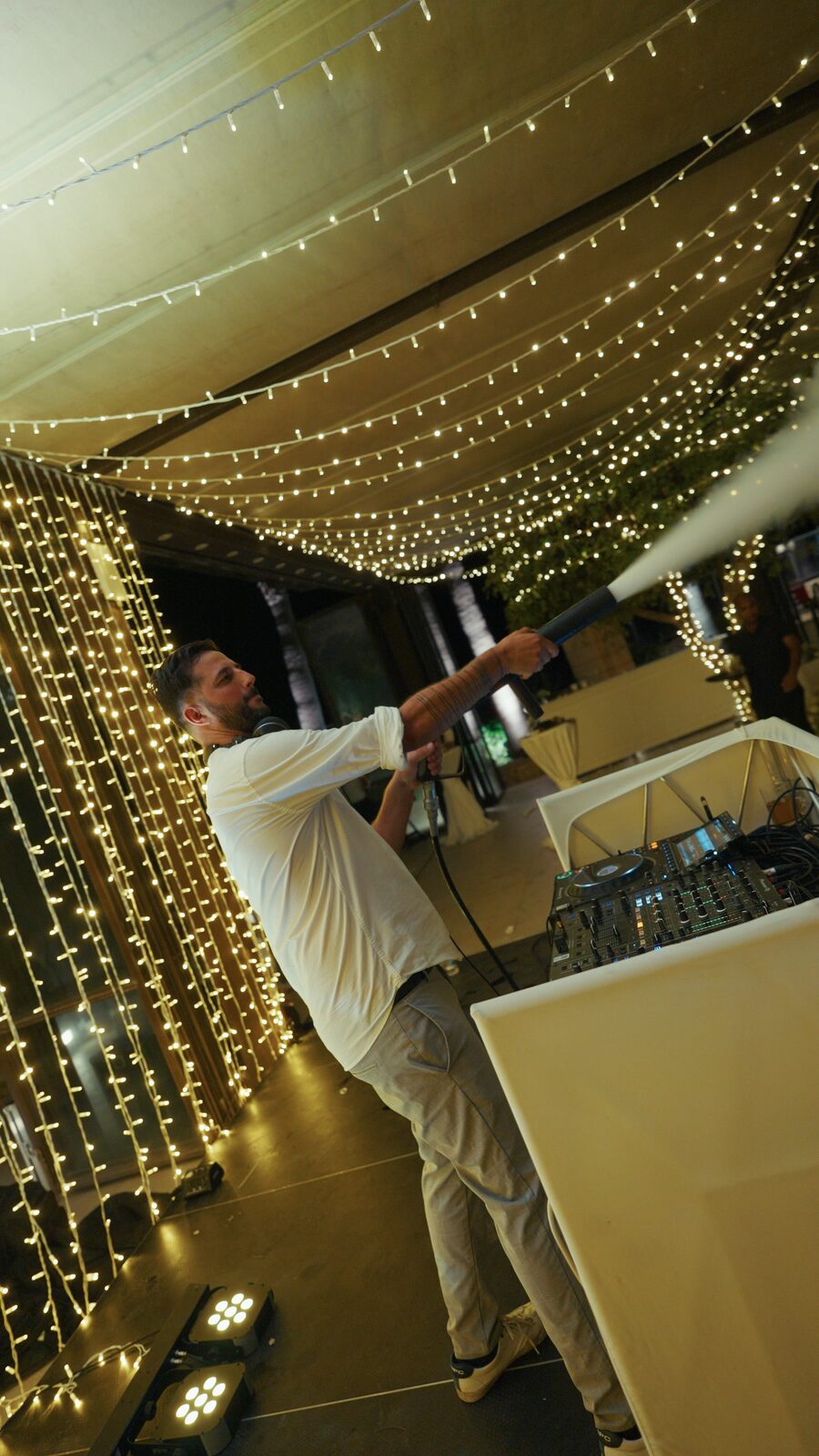
Not a light at all, but the reason the lights are visible. A very fine, odourless mist that hangs in the air and catches the beams. Without haze, a beam is just a dot on the ceiling. It is invisible in itself and clears without residue.
Mirror ball and pinspot
The oldest trick and still one of the best. A tightly focused light hitting a mirror ball scatters points across the whole room. Perfect for first dances and slow songs, where moving lights would be wrong.
Where it works best
Good to know
How many fixtures do we actually need?
For a small floor, four is enough to make a real difference. A standard wedding dancefloor usually sits at around eight. Twelve or more, normally flown on truss, is for large rooms, stages and anywhere with a lot of ceiling height to fill.
Will it be too much during dinner?
No. Through dinner and speeches the fixtures sit still in warm, low colour. Nothing moves until after the first dance unless you ask for it.
Can you match our colours?
Yes. The fixtures mix colour rather than using fixed gels, so we can match a brand colour, a bridesmaid dress or a flower palette closely.
Do we have to have haze?
Only if you want visible beams. If your venue does not permit haze, or you would rather not have it, we build the look around washes, spots and mirror balls instead and it still reads beautifully.
Can you put our initials on the floor?
Yes, using a spot with a custom gobo. For weddings that is usually the couple’s initials. For corporate events we cut your company logo as a gobo and project it large onto a wall. Both need ordering ahead of time, so tell us early.
Works well with
Add dancefloor lighting to your event
Tell us your date and venue and we will come back with what works in your space, what it costs and what it looks like on the night.