Services / Staging
Trussing
The frame that carries your lighting, effects and drapes, and quietly turns a collection of equipment into a production.
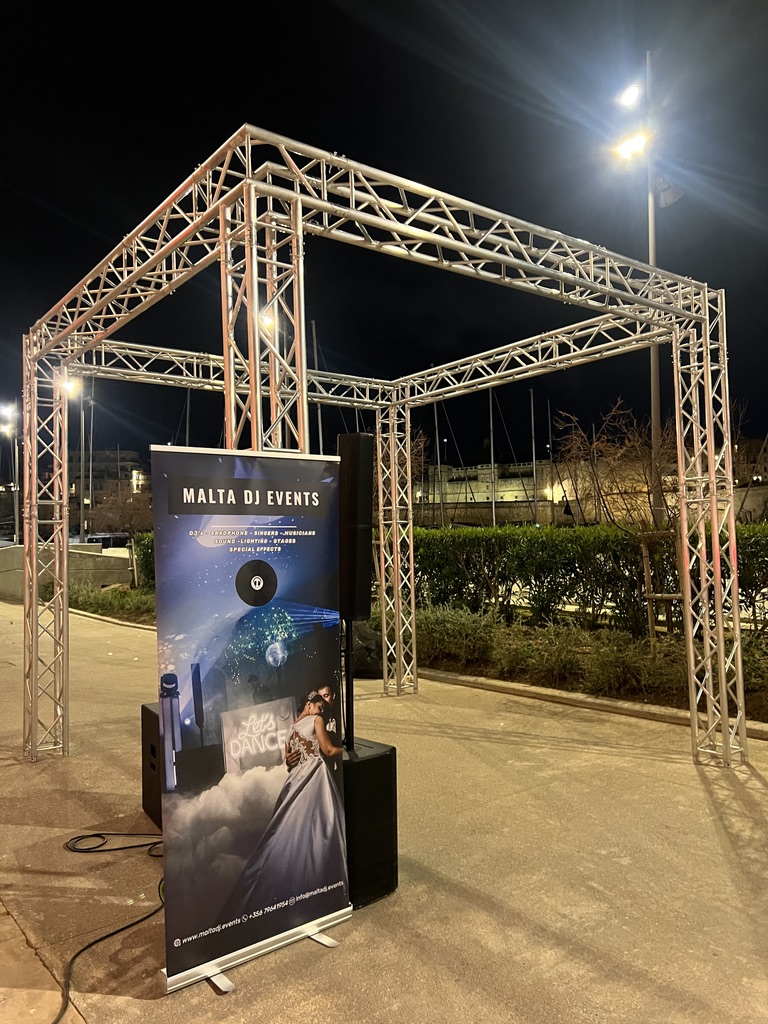
What it is
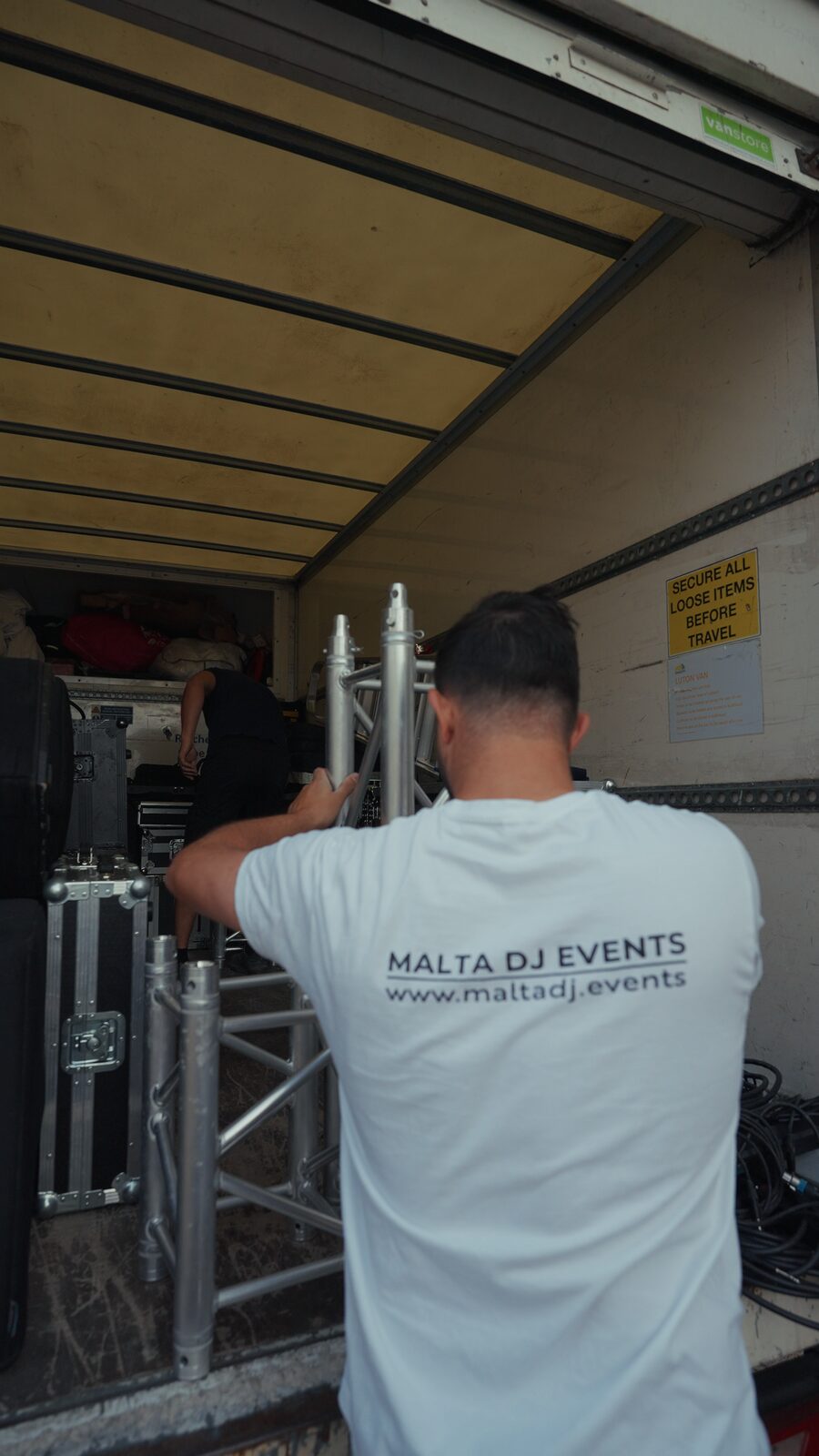
Truss is the aluminium framework that everything else hangs from. On its own it is not the thing your guests notice, which is exactly the point. What they notice is that the lights are coming from above rather than from a stand at eye level, and that there are no cables visible anywhere.
It matters most in venues with nothing to rig to. A marquee, a courtyard, a field, a modern function room with a plain ceiling. Without truss, every light has to live on a stand at head height, which limits what the lighting can do and puts equipment in your photographs.
It also carries things that are not lights. Signs, printed panels, drapes and corporate branding all need a structure rated to hold them safely.
How it works
01
Designed against your floor plan
Span, height and position are worked out from the room, the dancefloor and where guests will be, before anything is loaded on the van.
02
Built and weighted on site
Structures are assembled, raised and secured with appropriate weighting. Outdoors we assess wind and load accordingly, and we will change a plan if conditions call for it.
03
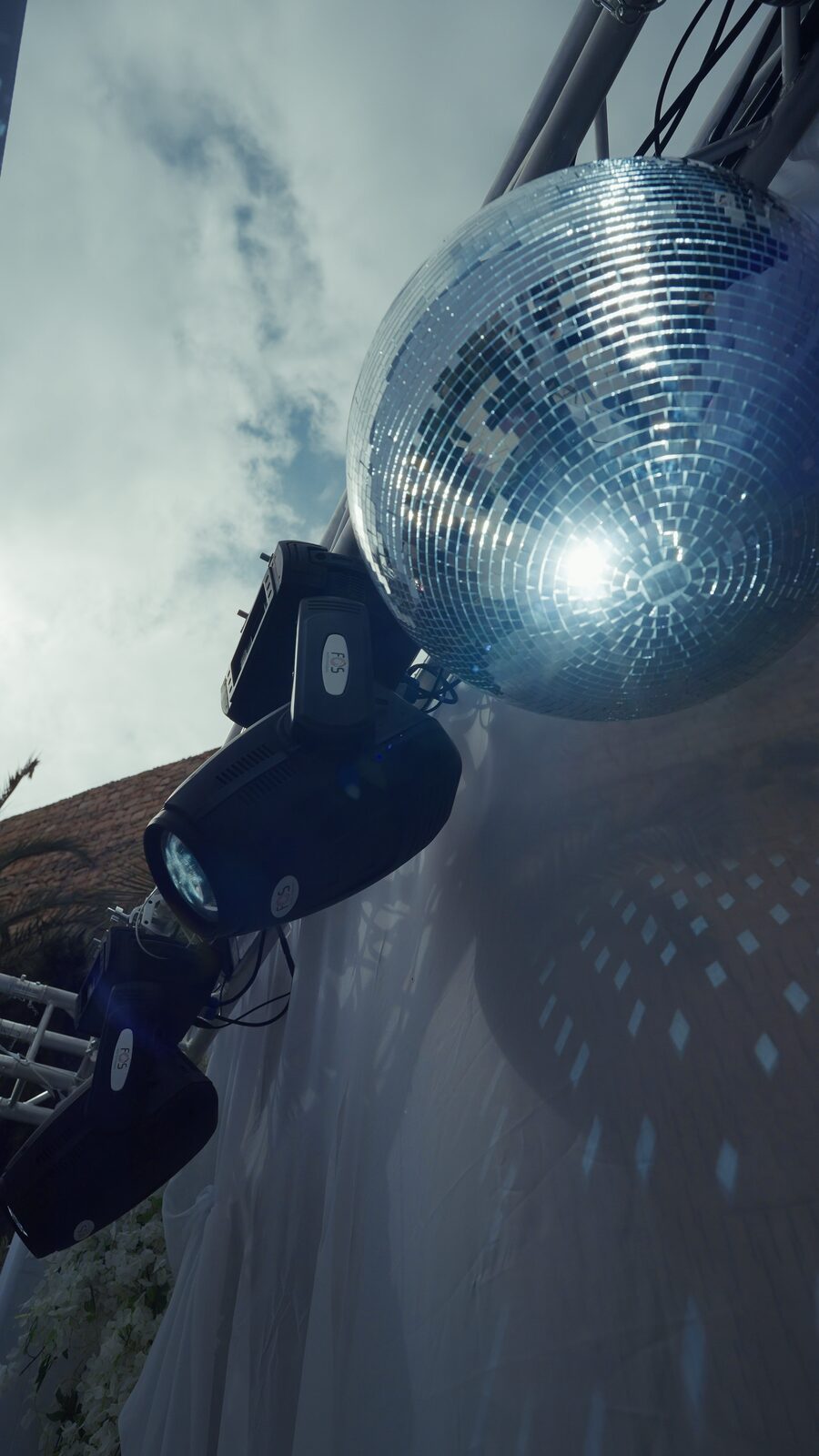
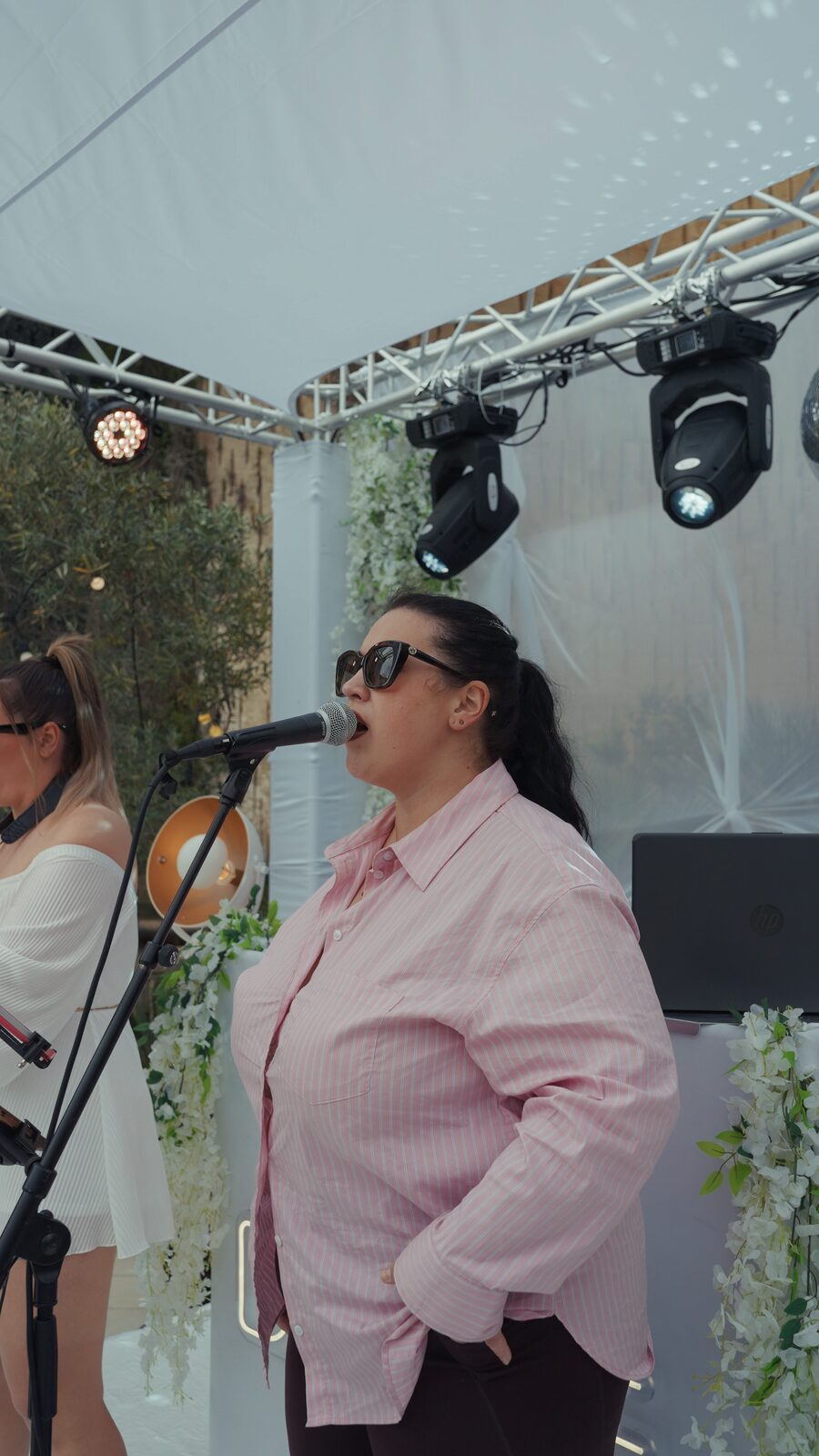
Rigged with lighting and effects
Fixtures, effects and any drapery are fitted and aimed once the structure is up, then cabled back cleanly out of sight.
04
Struck at the end
Dismantled and removed on the agreed schedule, with the venue left as we found it.
Structures and what they are for
Most events use one of these. Which one depends on what you are hanging and what you want it to frame.
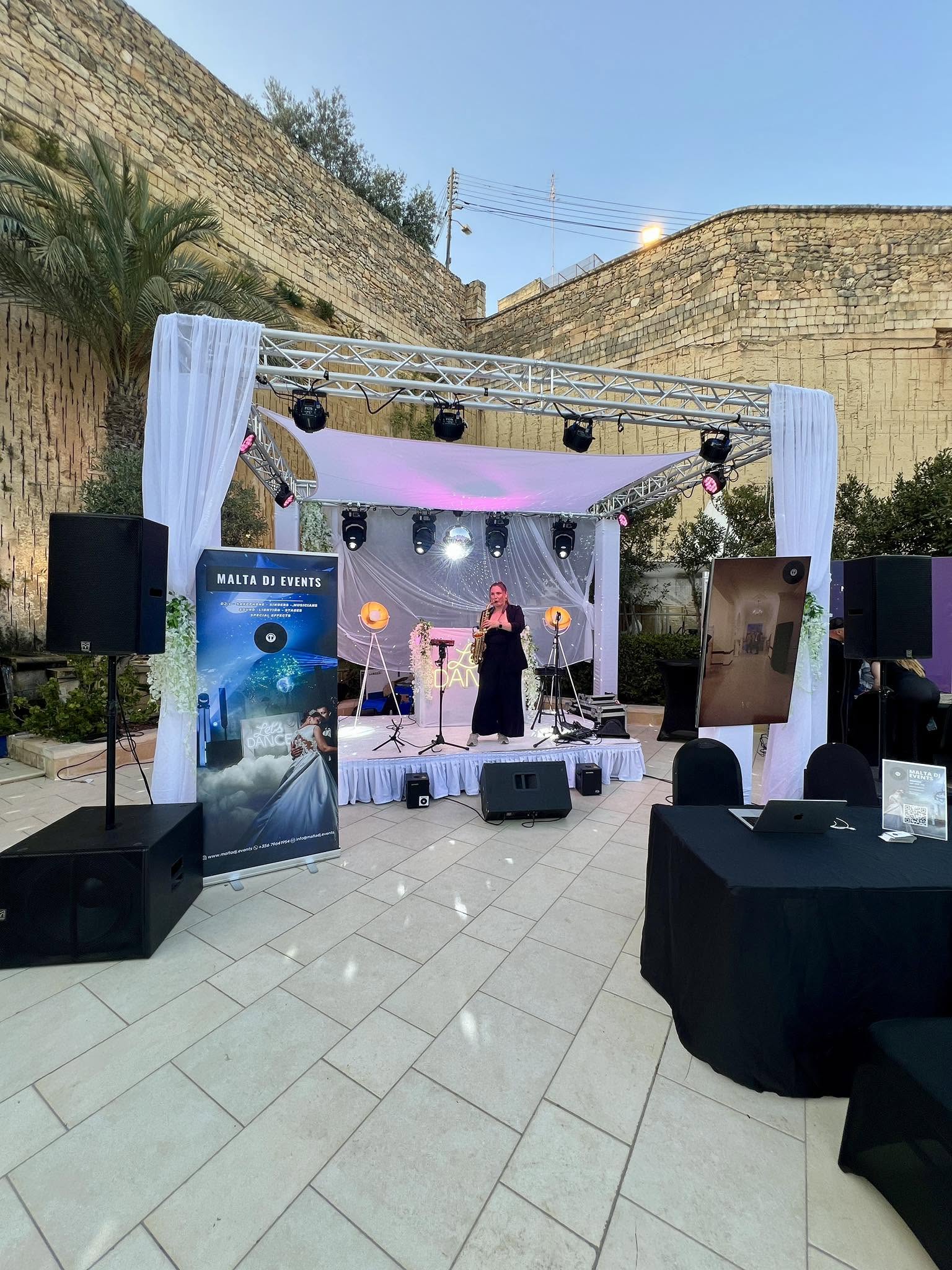
Goalpost
Two vertical towers with a horizontal beam between them. The standard structure behind a DJ or a band, carrying the main lighting and any backdrop. If you have seen a photo of a setup you liked, it was probably a goalpost.
Arch or entrance frame
Frames a doorway, a walkway or the entrance to a marquee. Used to mark the point where guests move from one part of the night into another, and to carry signage or florals overhead.
Towers
A pair of vertical structures either side of the dancefloor carrying lighting only. The smallest footprint option, for rooms where a full span is not practical.
Box or square truss over the floor
A full square rigged above the dancefloor with lighting all around and above it. The largest production look we build, and the one that makes a room feel like a venue rather than a function space.
Backdrop frame
A structure built specifically to carry drape, a sign or a printed panel behind the performance. Safer and far cleaner than fixing anything to a venue wall.
Where it works best
Good to know
Why not just put the lights on stands?
You can, and for a small event we often do. Stands put the fixtures at head height, which means beams travel across the room into people's eyes rather than down over them, and the stands themselves appear in every wide photograph.
How much space does it take up?
Less than people expect. A goalpost behind a DJ needs roughly a metre of depth. The span across is set by the room, typically somewhere between three and eight metres.
Is it safe indoors and outdoors?
Yes, when built properly. Structures are weighted and secured, loads are kept within rating, and outdoor builds are assessed for wind. We would rather change the design than push a structure past what conditions allow.
How long does it take to build?
A goalpost with lighting is a few hours including rigging and aiming. A box truss over a dancefloor is a longer build, so venue access time matters.
Can it hold a sign or a printed panel?
Yes, and it is a very common request. Lighting, signs and printed panels are all standard loads for these structures. Tell us the weight and the fixings and we will design for it.
Works well with
Add trussing to your event
Tell us your date and venue and we will come back with what works in your space, what it costs and what it looks like on the night.